
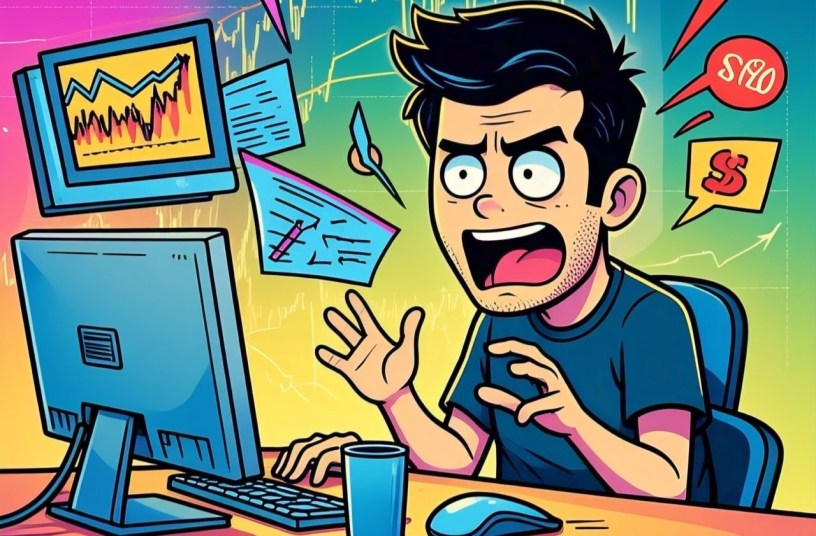
Imagine owning a business in which you could make money every day, from anywhere in the world, without having to employ people, sell products, deal with customers, or rent premises. All you would need is a small amount of starting capital, a laptop and a good Internet connection. This would have to be the best type of business in the world!
Well, this is exactly what the business of stock market trading has the potential to be. But, don’t be deceived by people who try to sell you this concept without explaining that, although uncomplicated, trading on the stock market entails a lot more than most people expect. I think we have all been exposed to people proclaiming to teach you how to make a fortune on the markets, sometimes in as short a time as a few minutes. It is easy to be enticed by presentations with dubious promises of becoming a trader on your first day and amassing fortunes.
Nothing could be further from the truth. There is risk involved and, if you don’t understand – and embrace – this risk, trading can be stressful and destructive. I have been asked, ‘Since you are teaching others how to trade on the stock market, and you trade yourself, how come you are not driving a Lamborghini?’ In many people’s minds, trading on the stock market is a way to get rich quickly; in fact, it is much easier to become poor quickly.
Trading is an extremely attractive way to make money, but I would like to make a statement: Trading is simultaneously the easiest, and the most difficult way to make money. Why is that? It is because it ‘plays with your mind’.
A skill you need to master is how to manage your emotions.
When trading, you will be facing a whole host of emotions that are tied to money at stake in your account
Greed
Fear
Doubt
Hope
Excitement
To be a winning trader, we need to learn to think and act contrary to our natural instincts. Many of our emotional patterns make us lose money, but when we are conscious of these patterns, we can overcome them.
It is advisable to trade at a level of capital and risk where a few losing trades does not hurt you emotionally. This level depends on your individual pain threshold.
Let’s have a look at how these emotions – when not managed correctly – can hurt you in your trading.
- Greed: This happens when you refuse to take profits, thinking the price will keep rising. There is nothing worse than watching a trade that has been in a nice profit turn into a loss purely because you were too greedy to take profits and thought that this trend would go on forever! This is where proper stop-loss and take-profit orders come into play!
- Fear: Fear can stop you from taking trades altogether or make you exit too soon, missing out on potential profits. For instance, if you’ve been burned by a bad forex trade before, you might hesitate even when a great setup appears. If you are trading with a proven system/strategy your fear should be minimal as you have done your homework and should have faith in your system.
- Doubt: Second-guessing yourself in trading can be dangerous. If you see a good trade opportunity that aligns with your entry criteria but hesitate too long, you might miss out, or worse—jump in late and enter at the wrong price. If you miss the trade, move on and wait for the next opportunity. Trust me, there will be more.
- Hope: Hope is not a strategy. Holding onto a losing trade hoping the market will turn around can lead to massive losses. If your positions are plummeting, waiting for a miracle might not be the best plan. Once again, proper use of stop-loss orders can help you out with this one.
- Excitement: Overconfidence after a few wins can make you take unnecessary risks. Just because you made R5,000 on a lucky trade doesn’t mean you should double your risk on the next one. Always treat each trade as a clean slate. Don’t let your previous losses or gains influence your decisions on the current trade.
Trading Psychology is probably the most tricky aspect of trading to master. But with practice, you will get there. One thing I can tell you for sure is that you WILL make bad decisions and mistakes in your trading – this is a part of the game. The important thing is that you recognize them and don’t keep on making them over and over again.
Mastering your mind is the key top being a successful trader. There are many excellent books on the subject that I encourage you to get hold of and read.
Please contact us if you would like some recommendations or if anything is unclear.
 /Blog
/Blog 